
World traveler Clown Tom Bolton
Adventure stories & photos

Northern & Central Europe
This page is focused on northern and central Europe including Finland, Denmark, Sweden, Austria, Switzerland and the Czech Republic. For Germany there is a seperate page.
Scandinavia – Finland
I traveled throughout Scandinavia during the summers from 1983 to 1995. In 1984 a performer from the Kansalis Finnish circus whom I had met in Spain invited me to do some shows, which in those days were strictly juggling. It took me a week to track down the circus, which had changed its tour dates. I only stayed some days but it was a fun experience. I had done some circus work in the States, poorly paid and literally made to shovel elephant shit 5 minutes after having done a show. If you are not a big name act in the circus, it generally sucks big time.
I imagine Finland is much different today but back then they were still in the shadow of the Soviet Union and it seemed a rather depressing place. Getting off the ferry in Helsinki, coming from Sweden, it looked like a disaster had struck. There were people lying all over the ground. Turns out they were just passed out drunk and it was only 5 pm. Such drunkenness turned out to be pretty normal throughout Scandinavia on a Saturday evening. This is the best time of the week to perform in most European towns since people go out for entertainment. But in Scandinavia it was usually out of control.

Norway – Oslo
Norway was the Scandinavian country I spent the most time in and Oslo the city most visited. The most important street is the Karl Johan Gate, which connects the train station to the castle. From the station it is an upward sloping pedestrian zone until Egertorget, which is an open area where most of the big shows were presented. Down the other side, the street is open to traffic and is hectic for making shows. By far the best pitch, there would often be a line-up of 5 to 10 performers each evening on Egertorget. Here is a photo from 1986 of Michael Bonnet, an American juggler rocking the pitch. I studied finance and became a performer. Michael studied and performed and eventually became a banker. Michael was an accomplished linguist who really inspired me to travel to places like Latin America and Asia.
The upper corner of Egertorget was the chosen spot for David “Circus Skunk”. His show relied on fairly basic music, juggling and slack rope techniques and a very minimum of speaking but his soft, subtle style really charmed the masses. It was eye-opening to see him work the often rowdy crowds with such a soft and simple character. He had grown up in California but like myself was born in Puerto Rico yet we didn’t seem to get along so well. Despite many musicians in Oslo, he had been one of the few clown/jugglers. I showed up on the scene and soon afterwards a lot of other jugglers started showing up. He seemed put off that I would show up each and every evening hoping to do at least one if not 2 shows. He thought that was excessive but the summer is short and I had to earn my money and was used to festivals and other cities where one could do numerous shows per day.


Oslo musicians
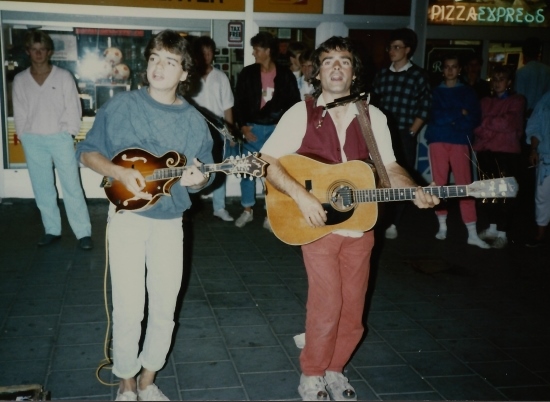
Many of the many musicians that worked Oslo were English or American, or the occasional German or Israeli that after years of street performing seemed to all gravitate to Oslo. The only Norwegian one I remember, Ronny, was also one of the most incredible I ever heard on the street, with a voice so rich that it sent shivers up my spine. Lawrence, on the right, was an Englishman, who had more or less settled in Oslo and often played with his son Daniel, on the left. Daniel went on to become an accomplished professional musician and his younger sister Jennifer also showed up some summers to play. It was a kind of novelty to have his kids playing with him and as they got older and had less time to accompany him, he made due with a parrot that would sit on his shoulder and chew on his shirt buttons. Over the years he had a couple of more kids, always with young, pretty locals half his age. Not sure if they were planned to replace the parrot or not.


Social problems despite wealth
Per capita, Norway had by far the worst junkie problem I have ever seen. In Oslo I would park by the foreign embassies since they were generally under tight surveillance. Elsewhere, one could hardly stop at a red light without a junkie trying to break into your vehicle. I was broken into while parked next to the kings farm, another time at high noon in front of the city hall while inside my motor home and plenty of people looking out a picture window in a crowded bar a couple of meters away.
Another time, I was parked near the performing pitch and had taken a girl there to make out while waiting my turn to perform. I had mirrored windows so I got a good look at the junkie trying to break in before I bashed him by opening the door. Bicycles were a big target as well and they used to lock up some of the well-known burglars over Easter weekend to lower the unbelievable number of break-ins since many people in Oslo would traditionally go to their huts on the coast then.
Oslo parks, beach & King’s farm
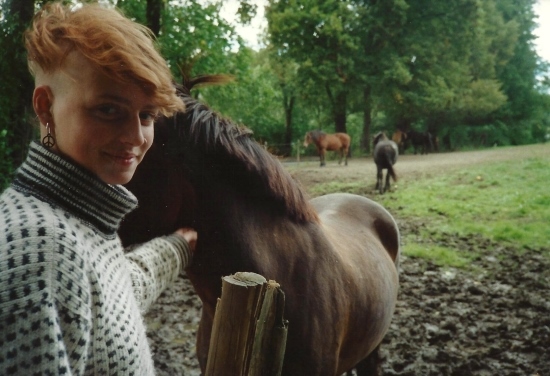
Other than dealing with junkies, my time in Oslo was pretty relaxed. Most of the performers used to park their vans overnight up at a lake but I drove out to the nearby peninsula Huk where the king had a farm where his herd of horses were kept. Here a local friend of mine makes friends with the royal herd. There was a woods on the other side where I would park and in the afternoon ride my bike to the nude beach, passing by the Viking ship museum.
One of the other attractions in Oslo was the centrally located Frogner Park. One section of this huge park is known as Vigeland Park. This park within a park is home to a series of over 200 sculptures by the artist Gustav Vigeland depicting nude bodies piled together including this tower. Despite the obvious phallic symbolism of the tower, the figures suggest affection and human bonding without being overtly sexual in nature.

Outside of Oslo – Risør
LOTS of performers used to work in Oslo, always bitching about how over-played it was. Yet the south coast of Norway had lot of little towns where one could perform for a day and then go on to the next as well as some bit bigger towns like Arendal, Kristiansand and Stavanger. These photos are from Risør, a nice little town that held a wooden boat festival, which was on the racing regatta tour. And in Scandinavia, land of the Vikings, sailing old wooden boats is a strong cultural tradition. I got to go out on one of the races, which was considered an honor. I have no experience in sailing so I spent most of the time trying to keep my head down to avoid a swinging mast-pole from bashing it in. I was actually hired to perform in Risør and this was one of my first serious paying gigs.
Viking traditions
Rather than going south, many of the performers, almost exclusively non-Norwegians, would hang around until long after the short summer vacation was over. They were waiting for the magic mushrooms to be in season. Apparently this is also an old Viking tradition. They would get zapped out of their skulls and go invade England to rape and pillage. And rather than says “cheers” when toasting a drink, the Scandinavians coincidentally say “skol”. It is claimed that the Vikings would lop of the top of their opponents’ heads and drink the blood out of their skullcaps to a hearty yell of Skol. Fact or fiction, I don’t know but seeing how people there get intoxicated and act crazy, it certainly rings true.


Food & living expensive
Norway was also super expensive, the only place where they would sell half a cucumber or pepper. It wasn’t allowed to import any food that could be grown locally even if that was in a greenhouse. The local wages were so high that imports like bananas would be the cheapest fruits available. I would load up with as much food as possible in Germany where it was much cheaper. I cooked and slept in my motor home so I could save most of the money I made on the street. Not sure what they passed off as American food in Norway but even a hamburger and fries would set one back. Not sure where in northern Norway I took these pictures including the food truck.


Weather & geography
The weather in Norway was freaky. When it was sunny in the north it would be continually pouring rain in the south and vice versa. One summer it was pissing down in Oslo so I decided to go north getting as far as Tromsø above the Arctic Circle. Along the way I had to cross bridges and take ferries to get pass the fjords. In the mountains I encountered a snow storm despite being the middle of summer. One can drive through Sweden where it is flatter and a straight line of trees but I enjoyed the scenic landscapes, like in the photo below, although it included the payment of numerous expensive tolls.

Trondheim
The king had died and I stopped in Trondheim 500 kilometers north of Oslo for the coronation of the new king on my way north. The biggest party in Norway in 40 years and I was the only street performer who showed up. Unfortunately, while I was at the party, someone was breaking into my motor home. The area around the Nidaros Cathedral where the coronation took place was decked out with countless Norwegian flags.

Traditional wooden houses
The center of Trondheim is built along a large river rather than the adjoining coast. There were many old wooden houses were built up on stilts. Unlike central Europe, one rarely finds houses in Scandinavia surviving from the middle ages. For warmth, the structures were built mainly of wood. And to keep warm and provide light over the long, cold, dark winters, there were a lot of stoves, fireplaces and candles used. Combined with Scandinavian drinking habits, most structures burned to the ground sooner or later.


Denmark, Copenhagen
Copenhagen was one of the most interesting cities in Scandinavia. It also had a long pedestrian street and quite a few possible pitches. I did some nice shows here but not consistently so. I saw other performers do almost nothing and get a huge crowd and I always had to work hard to get a nice circle. Unlike most other places in Scandinavia, there were other jugglers who had worked the streets well before I did.
Danish performers
There was a large kid’s circus group that specialized in unicycling and many of them juggled. I would be trying to make a living and then 3 or 4 young teenagers would show up nearby and pass clubs from tall unicycles. They grabbed attention being so young and such a group show had power in numbers. It was hard to compete against them although they were just looking to make some pocket money. A couple of times I saw dozens of them with their leader show up, supposedly this was to advertise the group but it seemed a bit like something out of Oliver Twist with kids working and bottling the crowd.
What was positive was that there were various Danish performers in Copenhagen, while I rarely saw a Norwegian one in Oslo or Swedish one in Stockholm in those days. I remember a group a group of young women who sang songs and acted out shorts skits that had the audiences crying with laughter. Someone explained to me that they used the theme songs and lines from well-known TV shows and advertisements, which sounded like rich source of comical material that can be tailor fit to different cultures. Another guy used to yell through a used toilet-paper tube as if it were a megaphone and his whole repertoire was to read menus of local restaurants, Again, a concept I never saw elsewhere but it got a great response.
Misadventures in Copenhagen
The spot in front of the bank was my favorite in Copenhagen when I could get it. I once had a volunteer here who though he would be funny. Instead of handing me my torches after helping me on my unicycle, he started throwing them at me and not gently. I was riding around yelling at him to take it easy and not be so aggressive but he thought it was hilarious. I eventually got all the torches and when I started to juggle them, one of them broke in half and the flaming end flew into the crowd. By coincidence, it flew right under the ass of the guy who had thrown the torches at me. The crowd must have thought that I had thrown it back in revenge but it had gotten damaged during his antics and broke. Makes one wonder if the idea of karma has something to it after all.
One of the reasons I was attracted to Scandinavia in my early career was that one could perform in English and most of the audience would seem to understand especially in a cosmopolitan city like Copenhagen. I have some vague memory of this show where an old guy came in and started saying a bunch of things to me in Danish and I didn’t understand a word.


Ventriloquist show Steve & Jack
The most established street performer in Copenhagen was an American, Steve Bernard. He was a fire eating, juggling ventriloquist with a rabbit puppet. Steve was the quiet nice guy but Jack; his rabbit was a loud mouth, smart-ass always ready with a critical comment. Many of the people wandering the streets in the evening would be drunk Swedes who loaded up on duty free liquor on the ferry rides from Sweden. Antagonizing them for their loutish behavior was a favorite subject for Jack but Steve always balanced it out with some self-depreciating humor about American ignorance and arrogant attitudes. He went on to perform in the Tivoli circus and even become a regular on Danish TV. He tapped into the local Copenhagen humor so finely that his show felt out of place when I once saw him try it in Oslo.


Copenhagen musicians & street vendors
A couple of American musicians Steve and Harris also played Copenhagen heavily. Coincidentally, they also lived in Tübingen for a while in a big commune with 2 nurses that I had met while traveling in Thailand. I think they were as attracted to the young women who seemed to hang around the street scene there as they were by the money. The laws tightened up for sellers in following years but the first season I passed through Copenhagen the vendors were virtually unregulated. It was hard to find a place to make a show because hundreds and hundreds of young people were taking all of the possible places to sell their jewelry and trinkets. Many of them were Israelis who would travel and buy cheap things in Latin America and Asia in the winter and sell the stuff in Europe in the summer. One of them made the comment that it was not a bad life to spend your summer looking down the shirts of beautiful girls contemplating a purchase.
Sweden, Stockholm misadventures
I often spent time in Sweden on my way through to Norway. I first went there within a couple of weeks after first arriving in Europe in 1983 to visited a couple of girls I had met early in the year in New Orleans. One was living in Stockholm and had invited me to visit. I went to her place as arranged and around 10 pm she suddenly said that she had to go off for a week to see her grandmother and now I should leave but if I was still in town when she returned I could visit her then.
I went into the old town known as Gamla Stan to look around and thought I would catch a late train out of town since I had a month long train pass but I ran into a guy named Viktor who was very friendly and I ended up staying at his place for the next week. He told me many tales of his travels to places like India and was a great inspiration for my own future travels.
I was mistrustful but again contacted the girl and she again said I should come to visit. I left my backpack in a locker in the train station and went to her place. Sure enough, we got along fine but at midnight she suddenly claimed that someone was coming to fix her stove the next morning and it was better if I wasn’t there. I went to the train station but found out that it was all locked up until morning.
I only had a light jacket on and it was freezing. I saw a bunch of young people who were staying overnight in a line to buy some concert tickets when they went on sale the next morning. I put myself in line as well but was shivering. Then the garbage men came around and emptied the public trashcans and replaced the heavy paper trash bags. They were fairly large so I took one and curled up inside, not warm but it helped.
A year later I took a ferry from Helsinki to Stockholm. A girl on the ferry invited me home. A few things she said made me question if she was a lesbian but I didn’t know. When it got late she said I should get undressed and get into her small bed with her. I didn’t know what she expected but when I caressed her slightly she freaked out and told me to leave. I never went to Stockholm again.
Göteborg street shows
As it was on the way to Oslo, I would generally stop in Göteborg, Sweden most summers. I had some of my most profitable and some of my most stressful shows there. The place to perform is a main drag known as “the Avenue”. The sidewalks were wide enough for shows in the evening but one still had cars driving up and down. Many “old timer” classic American cars would cruise by with their motors revving to get attention of the girls.
The people would get very drunk on the weekends and it was always on the edge of getting out of control. I also saw the popularity to play there went in waves. One summer there would be few acts and the money was great. As word got out, lots of performers would show up and it would become wall to wall shows and the audiences seemed to suffer from burnout or overload. The money would go down and then fewer performers would show up. This would fluctuate over a few years’ time so depending where the cycle was it could be great or terrible.
Göteborg – Liseborg Amusement Park
While in Göteborg I once contacted the Liseborg Amusement Park and got a contract for the following summer. Unfortunately, the artistic director screwed me around and backtracked on many promises and then grabbed a third of my pay for taxes although it had been negotiated in after tax amounts. I never did get my money even after complaining to the boss of the park. They had people doing surveys of the people leaving and I heard that my show was one of the most popular things as it was something new. But the management couldn’t get beyond the idea that I should charge more than the 3 man jazz band sitting in a corner with hardly any audience doing the same sets year after year.
They had a stage show with Las Vegas known performers who I know got paid much better than me. They had a larger crowd but only because they had 3 acts and they did 2 shows a day. I had a few less people but did 4 shows and really blew the people away. I think they called around and found that there are a lot of acts, especially from Eastern Europe and third world countries that will work for next to nothing – so why pay me a livable wage.
Switzerland – Uster
This is the local castle and nearby brewery in Uster, Switzerland a small town around 35 kilometers from Zürich. I had an Aunt and Uncle and 4 cousins living there in 1976. A family tradition was that with 14 you got to spend a summer visiting my paternal grandparents. My oldest sister and brother got to see them in Mexico. Then they moved to LA where my next older sister visited. When it was my turn, we took a family trip out west.
As compensation I got to go to Switzerland for a month. And I went in April during the school year, I believe because they were planning to move back to the States at the beginning of the summer. I took my schoolbooks with me but never opened them. I was too busy site seeing and getting drunk. Unlike the States, alcohol was readily available to teenagers there. One could buy beer at 16 and if controlled in a store, you could tell them it was for your parents and often, as not they would believe you. And as my cousin and I both had the hobby of collecting beer cans back then, we were kept pretty busy adding to our collections. When I returned to school, it seemed that nobody had really noticed that I had been gone.


Luzern, Switzerland
This is the famous old covered bridge known as the Kapellbrücke or Chapel Bridge in beautiful Luzern, one of the Swiss cities I first visited with my Aunt and Uncle and again with my cousins. You just jumped on a train and went where you wanted. I have been to Luzern quite a few times since. According to Wikipedia, this bridge is the second most photographed attraction in Switzerland, the Matterhorn being the first. The bridge was originally built in 1365 but burned down a decade or so ago and they replaced it with a copy. And just like the original, the new one is also a haven to thousands of spiders. Seems I am the only one who notices this but Switzerland is simply crawling with spiders! I have no particular fear of them but it is rather creepy. Otherwise, it is a pretty mid-sized city where I later made shows on occasion.


Alps, Santis Mountain in Apenzellerland
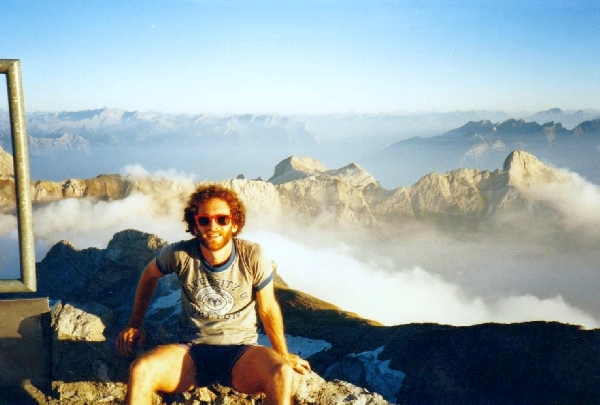
These images are from 1985. My French girlfriend was with me at the time and we hiked up to the top of Santis Mountain in rural Appenzellerland, Switzerland. It was not technical but a good days hike non-the-less. The view was spectacular yet one could get a cold beer at the bar on top and ride the cable car back down. Very convenient when you are thirsty and tired but not quite the rugged nature I was used to in the Colorado Rockies. I’m not much of a skier but did do some skiing in Switzerland when I was younger. No matter where you are in Switzerland you are never far from some nice nature that has its appeal summer or winter.


Zürich, Theaterspektakel
From my home in Stuttgart, Switzerland is only 2 hours’ drive away. Also, my good friend and fellow American juggler Steve Goetz married a Swiss acrobat and settled in Zürich for 10 years. I would stop by at least a couple of times a year particularly each August during the Zürich Theaterspektakel which is a well know festival. We only get to pass our hats there and just barely get tolerated by the organizers yet it was a traditional place for lots of old-timer performers to meet up.
In recent years the organization has changed and many of the regulars stopped coming. Instead there has been a wave of Spain based performers, many from South America, and all looking for a place to make money as most of southern Europe has suffered economic problems. I miss the old atmosphere but also appreciate the creativity shown by many of the newer performers. The following photos are all from Theaterspektakel 2010, the first 2 are views of what has always been known as the main pitch. The following 2 photos are on the other side of the main festival area on what is referred to as the fly pitch although many of the biggest and best crowds can be gathered here.


Festival by lake, something for everyone
The festival takes place a bit out of the center right by the lake and includes a venue on a small island reached by a bridge. In addition to the two pitches for big circle shows, there are smaller spaces where some musicians, like Andy in the photo who is also a great artist, henna tatoo artists, hair wrappers etc. work. In addition, there are always a few small bands that play to the various tables where people get their expensive food.
I’ve always felt that the food sellers should somehow chip in some money towards the performers because many people come just to see us and then eat and the people who go into the tent shows would have less reason to stick around after the official shows. One or two of the bigger food tents have been known to give a slight discount to performers but I honestly think that they would sell 70% less if we simply weren’t there. Theaterspektakel is not really set up for kids but they do have an antique carousel that is powered by a guy with a pole accompanied by a live musician.


Balloon twister & breakdance troupe
Most of the balloon “artists” I see in Europe don’t really honor the name. This guy who is a regular at the “Spek” deservingly calls himself Picasso and is one of the best balloon twisters I know. Rather than big multi-balloon figures, he collects each scrape of balloon and adds bits and pieces to his small but complicated creations. For the Suicidal Lifestyles, a top break-dance group from Budapest that have been regulars for more than 10 years, he once made a balloon that not only had the same color costume but you could even recognize which of the troupe it should be. A simple creation for Picasso, a rabbit with a big white tooth and a carrot with the green part still on top.


Belgium – Brussels
This is Dominique my French girlfriend standing on the Grand Place in central Brussels. We went to the big European juggling convention there in 1988.

Antwerp, Belgium
I have never worked much in Belgium but my favorite place there was Antwerp, which was the scene of the following true story: Summer of ’94 and I’m doing a tour through Belgium. Stop in Antwerp, one of the best cities in the country for street shows. After seeing many possibilities, judge the plaza in front of the big cathedral to be the best pitch. Unfortunately, many other performers have already discovered this fact. One of the regulars, a juggler from Amsterdam, is ready to give it a go. He stands on his chair and commences to shout to the people to gather around. Strange thing is that he is wearing a Walkman and wiggling to the beat. Bored of his own generic show that he needs some music to entertain himself with, or what?
Meanwhile, 15 yards behind him, there is a couple sitting propped against the doors of the cathedral, sucking face oblivious to the show or anything else for that matter. She starts to rub his crotch, glances around, like no problem; it’s only mid-day with a million people around. Naturally with some discretion, she proceeds to unzip him and give him a blowjob. Well, Mr. Be-Bop juggler is too out of tune to notice what his intended audience is looking at, nonetheless that it obviously isn’t him. He had had a few interested onlookers but suddenly the place was getting packed. Funny though that the entire crowd was behind him.
Show time over here
Over here! Show time! Juggling, unicycling, the big 8 footer!!! The crowd swells. Suddenly, breaking through their edge is a monk. Or rather a groom-to-be, dressed as a monk, out on the town with his bachelor party buddies. Such dressing up and making nonsense in the street are one of those local pre-wedding traditions.
“What’s this?!” cried the intoxicated monk. “Unholy, sexual conduct in front of our Lord’s cathedral. This is blasphemy. This is heresy. Repent your evil ways and give the wench to me or you’ll burn in the fires of hell for this!!” or so I understood him from my less than perfect knowledge of the local dialect. The crowd loved it. What a frickin’ show.
Audience appreciation
And this crowd wasn’t cheap. Someone threw the couple a coin, followed by another. It showered money to the tune of a decent hat. By then my own view of the event was blocked. I don’t know if she finished him off or got too self-conscious and bailed. The finishing touch to an unbelievable street “show” was when the whole crowd took up the chant in English: “WE WANT MORE, WE WANT MORE!”
Afterwards, I went up to the unlucky juggler who by this time had finally noticed that something was wrong and wisely decided to give up on his crowd draw. Well, who could do a show to top that anyway? “What happened?” he asked, “I kind of wondered when I saw everyone was behind me, so like I decided to stop”. RIGHT! Noticing subtleties like that is the forte of a master street performer. Anyway, show time! Juggling, unicycling!, the big 8 footer!!! Such be our European street scene. THE END.
Austria – Vienna
I always liked Vienna. It has some majestic buildings like the upper Belvedere Palace shown here. Not the only castle in Vienna, the Belvedere complex is one of the nicest. Built in Baroque style during the Habsburg dynasty, It has a lower and upper palace, contains a world class art museum and has extensive gardens. Vienna has a couple of big pedestrian streets and is full of tourists year round. Problem is that they only allow music and no clowns or jugglers to perform there. My first attempts there were excellent since clowns were not often seen and there were so many musicians that by the time the police would come to control me that I would have already have done a few shows. Then they very severely limited the number of musicians as well and would be hassling me before I had my props set up for my first show.

The intersection of the 2 main walking streets is a big plaza known as Stephansplatz dominated by the Stephan’s Cathedral. I once did a show there and had a guy watching that appeared to be mentally retarded. An adult that acted like an overly active 5 year old who was totally into my show and happened to be around 7 feet tall (2,10 m) and about 600 pounds (273 kg). He volunteered to help me onto my high unicycle from where I still had to reach up to his shoulder rather than down. Then he lit my torches, which I had handed him. I started to ride around within my circle and as I was about to get the torches, 2 policemen entered the show.
They went to the guy and demanded the torches. He looked at them and with a serious expression said that he couldn’t do that because they belonged to the clown! The police proceeded to try and jump up and grab the torches but they couldn’t reach them. I meanwhile was using pantomime to indicate that the police were idiots and the crowd started to laugh at them. Eventually I had to stop the show anyway but they let me off with a warning. There were a few hundred people standing there watching what they would do and I think they were too embarrassed and afraid of getting hassled from the crowd that they didn’t what to do more.
Multiple visits to friends & family in Vienna
While I was in Kathmandu in early 1989, I had met an Austrian woman Ulli who was a teacher in Vienna. We were never romantically involved but became good friends and I would visit her on occasion in Austria. Then my Uncle Ham who had once lived in Switzerland for some years took a research position for a couple of years in Vienna. He and my Aunt had taken over the raising of their granddaughter Bridget who was about 9 and arrived knowing little German. I arranged that my Uncle hired Ulli to tutor him and Bridget in German.
Ulli was surprised when I eventually mentioned that my Uncle had won a Nobel Prize in medicine for the groundwork of genetic engineering. He later had the idea that the human genome could be mapped much faster than the method that was being used by the US government sponsored team. Craig Venter was the marketing and organizing guy who spearheaded the alternative project that took the lead in the project. Venter was always the guy in the news, proclaimed as a genius. Or sometimes the credit was given to the government team, which finally caught on and did a lot of the work by copying the methods of Venters team. The unsung hero and real brains behind the scene was my Uncle Ham. These photos are of a building in Vienna designed by the artist Hundertwasser that I was first shown by my friend Ulli.


Vienna revisited in 2024
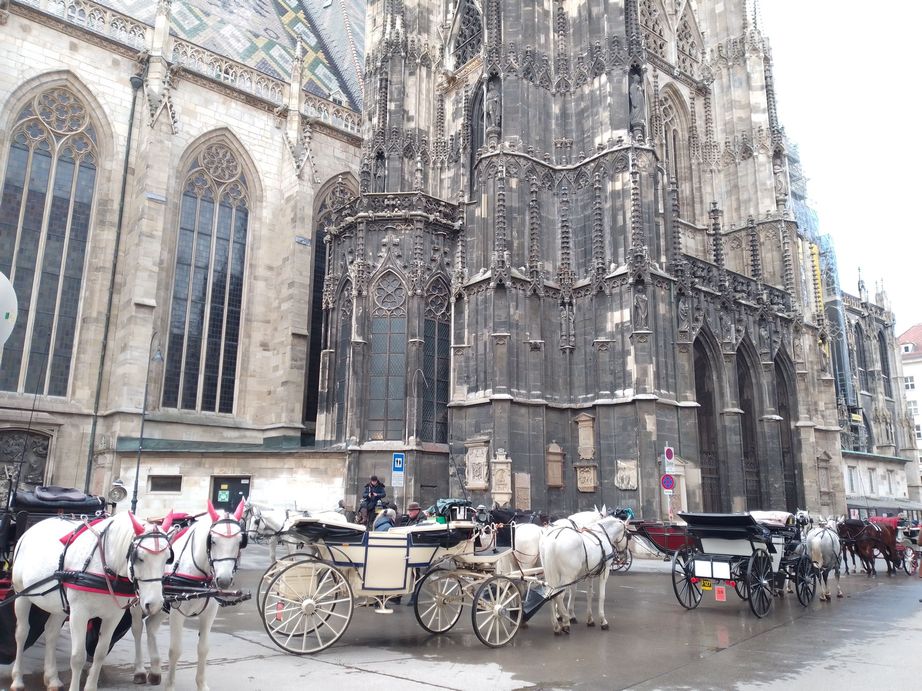
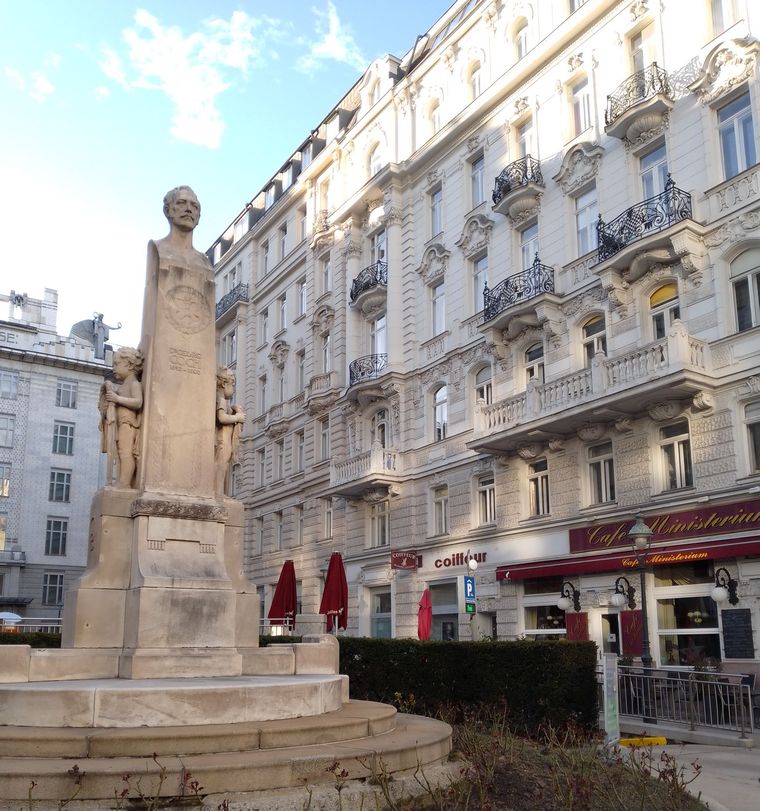
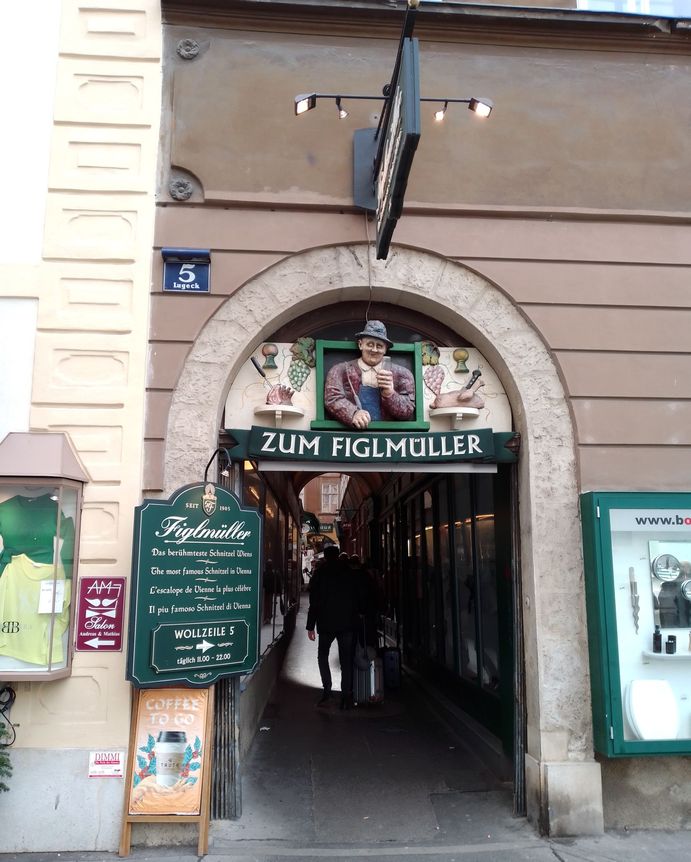
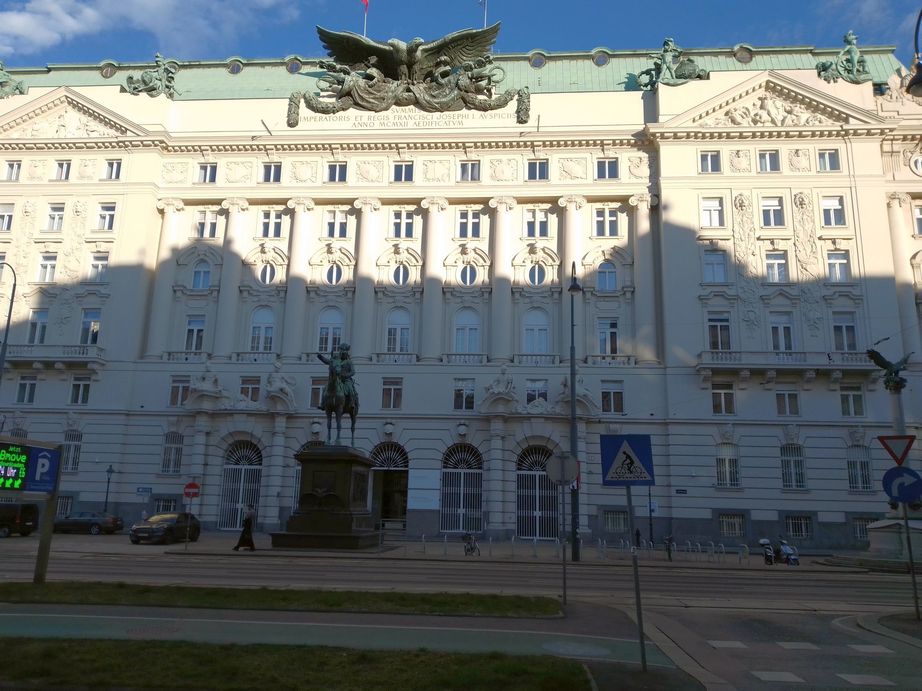
In 2024 I reconnected to my old friend Ulli and visited Vienna again. The following is more of a photo dump showing the above mentioned Stephansplatz with the cathedral and the many horse drawn carriages found there. In addition are a few of the majestic buildings in the center including the Albertina modern museum, summer palace and Postsparkasse building. Returning home to Stuttgart looked drab and small in comparison as Vienna is really one of the most impresive cities in Europe.






Graz, Linz & Salzburg
I traveled around Austria a few times visiting towns like Graz, Salzburg and Linz but seem to have misplaced most of my pictures of Austria. I can remember that Salzburg was big and pretty but the police were known for harassing street performers other than classical musicians who they felt best represented their culture. Graz was a medium sized University town that was open and fun and good for shows. Linz was probably close in size to Graz but seemed to lack much atmosphere for making shows outside of the big buskers’ festival they hold each year, asking performers to participate without any pay.
Mauthausen concentration camp
Near Linz, I went with my friend Uli to see the Mauthausen concentration camp. Like Dachau near Munich which I eventually visited as well, it has been maintained as a museum to the horrors of the holocaust. It was actually a whole complex of camps set up around a large granite quarry where the prisoners were used as slave laborers who were worked to death in the mine. The whole place really looked the part; cold and austere – simply an institution meant to dehumanize people.


Dissection tables. gas chamber & cremation ovens
Holding cells and a dissecting table for extracting any dental gold or who knows what kind of atrocious experiments. They had multiple gas chambers disguised as shower rooms and ovens to burn bodies. Even with the ovens going 24 hours, it is hard to imagine how they could burn them fast enough on such a large scale. Personnel to do this dirty work were easy to come by – they had an endless stream of workers. It was a very somber experience just to visit and one I have always had to departmentalize in my brain as I ended up living in Germany.
Even my own father-in-law had been in the Nazi party and fought in the war. It is strange to think about how people I know and their relatives participated in such an event yet they are also someone’s parent, or aunt or uncle. Even my friend Uli had to confront her mother for displaying a plaque for some award won by her beloved brother since it was given by a Nazi regime and had swastikas on it. Not that I think Austrian Nazis were somehow worse than German ones but many didn’t face up to their guilt as well after the war, relying on the excuse that they were one of Hitler’s first victims and thus somehow not responsible for their own participation.


Czech Republic – Prague
I first went to Prague in the late summer of 1991. The Czech Republic was still integrated with Slovakia as Czechoslovakia back then. I also went to Bratislava and Budapest, Hungry on that trip. Despite the claims from Hungarians who ALWAYS claim that Budapest is the most beautiful city in the world, it paled in comparison to Prague. This was not long after the wall had fallen, so the atmosphere was one of excitement and hope after the recent history of being controlled by foreign powers like the Austro-Hungarian Empire, fascist Germany and then the Soviet Union. I haven’t any photos from that trip but returned to Prague in October 2010.
Old Town Square, City Hall tower astronomical clock
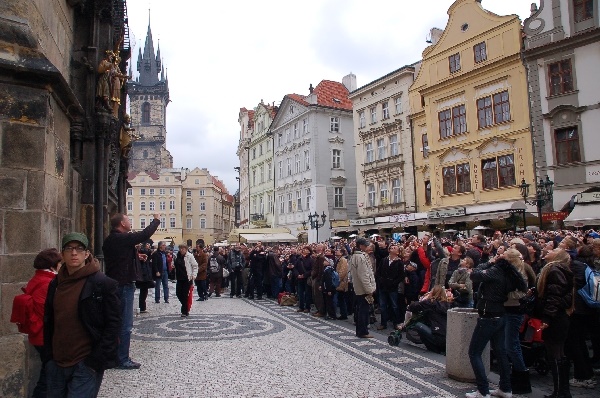
One of the best-known historical attractions is the Old Town Square in the center of the city. The old town hall there has a tower with a huge clock that shows the time and another that shows the positions of the sun and moon. On the hour, there are 4 figures above that move, which represent the things most hated when the clock was built centuries ago – vanity and greed, Jews and Turks (need one say more to that!) In addition figures of the 12 apostles appear before 2 windows. One can also go up in the City Hall tower for a good view of the area. I actually did a couple of show on this spot back in 1991 but later found it better to work elsewhere on the square. The problem wasn’t so much the constant hordes of tourists but that the horse drawn carriages would regularly drive through.



Old Town Square
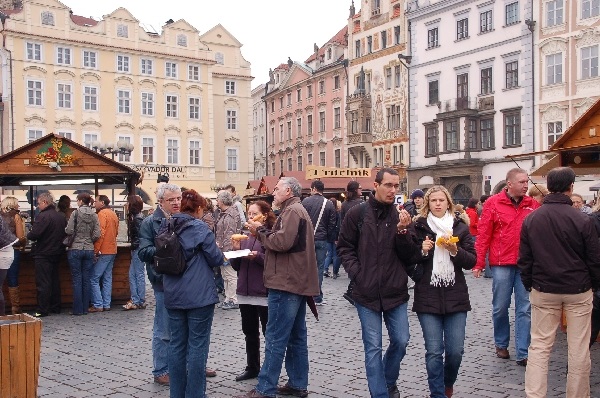
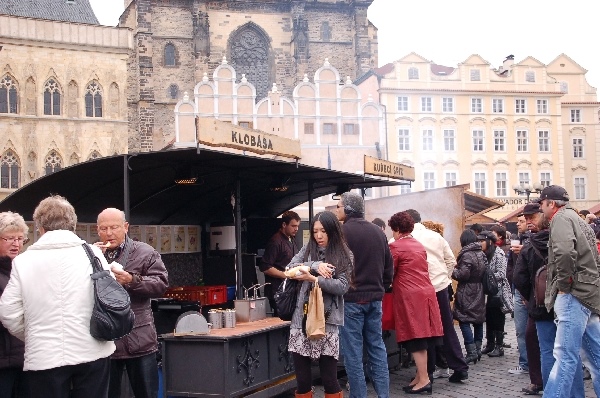
In front of the city hall over the center of the square where there was a small wine and cheese festival going on. The square is a central meeting place of the city with its beautiful buildings, statues and open space. Its also a place popular for street performers or events of all kinds


Prague street shows
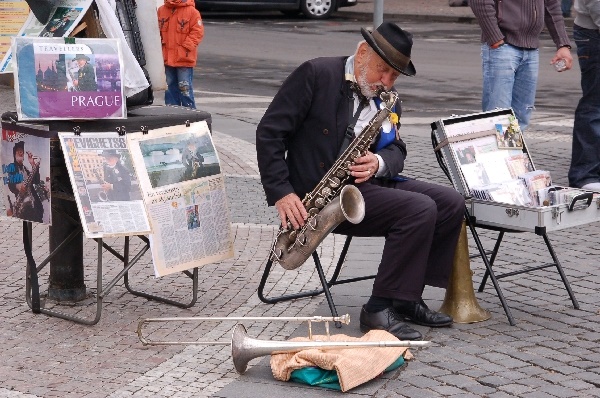
This musician was playing just off of the square. I saw a number of musicians about town in 2010 but was surprised not to see any other acts. Even back in 1991, I was told that one needed a license, which should be hard to get and at least a 3-month wait. I presented myself at the office and they immediately gave me a permit for some days when I told them that I was a professional performer from America. Having gotten rid of the communists, America was idealized by the Czechs as the beacon of the free world. Or at least that’s what they thought back then!
There were around 10,000 Americans teaching English and other subjects and I heard it was a wild and crazy time for many young ex-pates. I had a heavy hat after each show but the 3 smallest denominations of coins were worth so little that I threw them over a wall into a school courtyard. The money was not much compared to what one would expect in the rest of Western Europe but someone pointed out that I had made in a few days the equivalence of an average workers monthly wage.
Typical Prague architecture, Republic Square
Some typical street scenes in the center. Many of the buildings were damaged during WWII, not from the occupying Germans but from American bombs but it was minor compared to what happened to many places and it retains a very old world flair that few places can match on such a scale. Republic Square is one of the central landmarks containing an old tower and to the right in the picture the Municipal Building, which is a treasure of Art Nouveau design. It contains a number of restaurants with murals and stained glass by local masters including Alfons Mucha.


Czech National Museum
The Czech National Museum seen behind the statue below right is vast. It’s in the center of the city on Wenceslas Square shown here. It contains the Museum of Natural Science, the Historical Museum, the Naprstek Museum of Asia, African, and American Cultures, the National Museum Library, the Central Office of Museology and the Museum of Czech Music. The picture below left was taken in central Prague and I think is also a museum but I forget exactly what it was.


American fast food takes over
KFC, Burger King, Subway as well as scores of well-known European chain stores are predominating. There are also multitudes of restaurants of every kind, which is a relief since the local food tends towards meat and dumplings. Years ago, I found a single place in the center to get a pizza. Seemed it had been frozen and topped with frozen mixed veggies. Now a quick slice of pizza or good Italian food is easy to find and prices are very reasonable although naturally higher in the more touristy spots. I love the irony of this scene; The Museum of Communism is situated above a very sizable McDonalds! There is also a toy musuem that was having a Barbie exhibition; something that seems about American as one can get.


Vltava River, Prague
The Vltava River runs through the center of Prague. A movie with Tom Cruise in it was being filmed and the red boat was docked in the river to supply additional lighting.In addition to the many ships and ferries, one of the famous motives to photograph on the river is the Charles Bridge.


Charles Bridge
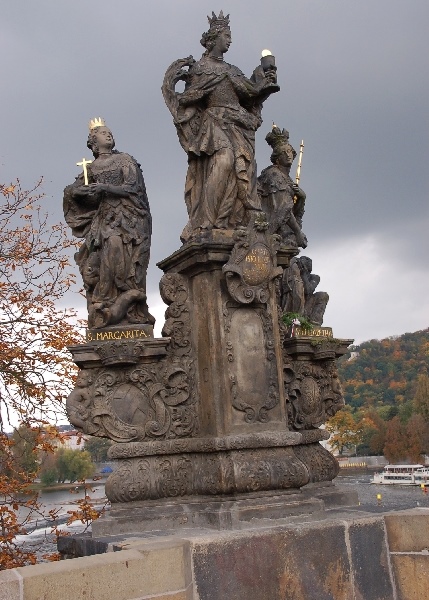
This is on the Charles Bridge looking east towards the center. The bridge is covered with cobblestones and statues and closed to vehicles. There are many souvenirs stands and even some musicians play directly on the bridge. Of all of the figures I’ve seen in the world that one is supposed to touch or rub for good luck, this one seems to make the most sense. Who doesn’t like to pat a nice dog? Also shown is the west end of the bridge, which starts the old quarter below the castle. If anything, it is even quainter than the old center.


Prague tourist information center
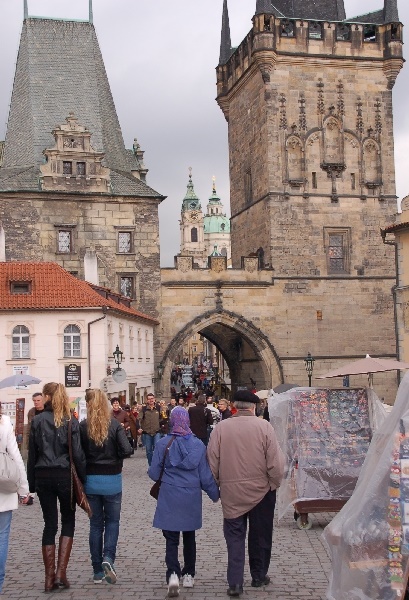
From the Charles bridge going towards the center one passes under a tower archway. The Prague tourist information center is located there. To grab people’s attention they didn’t just have a sign but a person in middle-aged armored to welcome you.


Prague Castle, St Vitus Cathedral
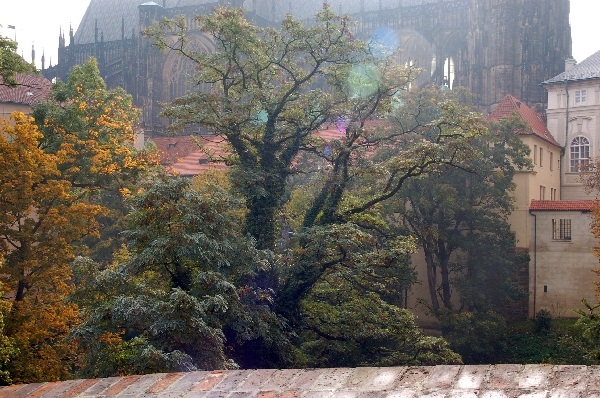
Walking, one reaches both the lower or higher entrances to the castle complex from the south. Taking a metro or tram one has an entrance to the upper north side. One first comes to the royal gardens whihc run along side and a bit above the castle complex. From nearby is a view of the castle church looking across the moat. One can get relatively cheap 24-hour passes for the well-used public transportation. I mostly used the metro, which is pretty straightforward and has 3 lines. Understanding the tram and buses is a bit more complicated but one can change freely between them. Accommodation is expensive in the center so it is recommendable to find a place a bit outside but close to a metro station.
The St. Vitus Cathedral within the castle grounds is huge having been added on to over the centuries. The local artist Mucha did this stained glass window. His distinctive style is best known from posters and advertisements but he also did large painting and drawings and there is an excellent museum in the center dedicated to his work.




Prague Castle Complex
The area directly above the Prague Castle also has lots of big old buildings, statues and the occasional souvenir stand. There are great views over the city from here na dit was another spot I saw local musicians playing. Here are multiple views of the main plaza in front of the upper north entrance to the castle.


Within the Prague Castle complex
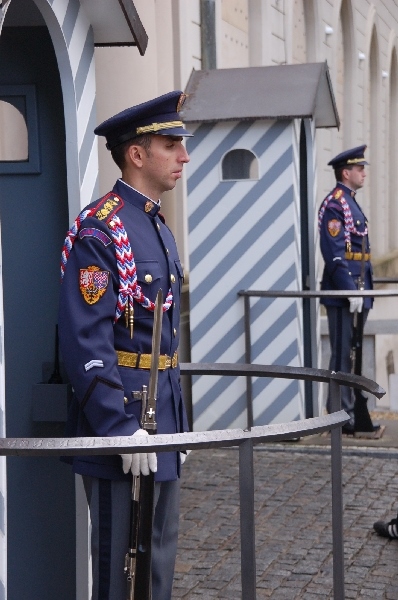
Within the Prague Castle complex are palaces, chapels, the cathedral and various museums. We didn’t even pay to go into any of the buildings yet there is more than one can really see in an afternoon for free. One first has to pass through the outer gates and then through an archway with military guards who looked to be more of a decoration than a security consideration.


Continuing through the Prague castle complex
Once inside one followed the complex downhill passing through multiple archways and courtyards with fountains. The one building we actually entered was the Vitus Cathedral.


Path down to Prague city center
Leaving the lower exit of the castle complex one finds a route down towards the center. On one side are hills with vineyards and the other side overviews of the city.


Old city below Prague Castle
Looking back towards the river on the way up to the castle. Despite their size, I assume that many buildings here were personal dwellings rather than government buildings although I saw quite a few embassies like the Italian here as well. About half way up towards the upper entrance to the castle is a square in front of the St. Nicholas church, which is one of the biggest of Prague’s many churches. We didn’t get to go inside because a concert was starting soon and one had to pay an entrance fee. This seemed to be a common thing at churches in Prague and I wondered if it was more a strategy to make money or due to a lack of venues for classical music. We did go in the nearby Our Lady Victorious church, where a famous statue of the Christ child is displayed.


So, those were just a few tales from my many travels over the last thirty and something years. I hope you've enjoyed another side of a traveling clown! If you want, write me an email or better yet, book my show or set a link to this website or just state me as the beneficiary of your will!
To book or see more information about Tom's clown show and entertainment, visit one or both of his clown websites:
Clown Stuttgart www.clowntombolton.com
Clown juggler Stuttgart, Gremany www.clown-event.de